


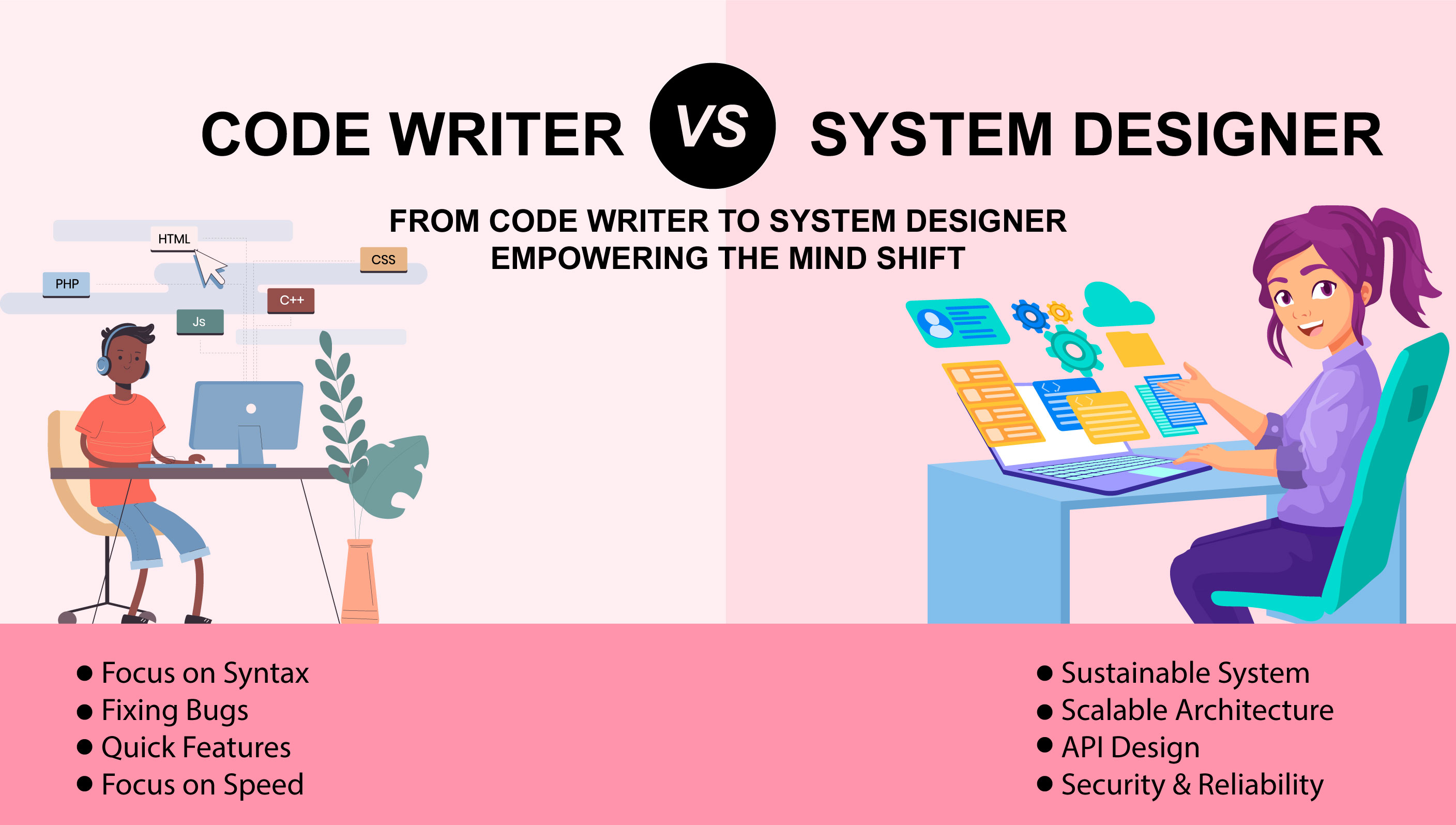
Beyond the Syntax: Why I Stopped "Coding" and Started Building
Early in my career, I measured my productivity by lines of code and the speed of my PRs. I thought a "𝗴𝗿𝗲𝗮𝘁 𝗱𝗲𝘃𝗲𝗹𝗼𝗽𝗲𝗿" was just a fast one. I was wrong.
Today, I realize that code is often the easiest part of the job. The real challenge and the real value lies in System Design.
When you move from a "𝗖𝗼𝗱𝗲 𝗪𝗿𝗶𝘁𝗲𝗿" to a "𝗦𝘆𝘀𝘁𝗲𝗺 𝗗𝗲𝘀𝗶𝗴𝗻𝗲𝗿," your questions change:
• 𝗧𝗵𝗲 𝗝𝘂𝗻𝗶𝗼𝗿 𝗤𝘂𝗲𝘀𝘁𝗶𝗼𝗻: "How do I write this function?"
• 𝗧𝗵𝗲 𝗦𝗲𝗻𝗶𝗼𝗿 𝗤𝘂𝗲𝘀𝘁𝗶𝗼𝗻: "How will this architecture handle a 10x spike in traffic?"
Whether I'm working on a management tool or a complex enterprise platform, I’ve learned that a "𝘄𝗼𝗿𝗸𝗶𝗻𝗴" feature isn't enough. It has to be resilient. This means prioritizing:
• 𝗦𝗰𝗮𝗹𝗮𝗯𝗹𝗲 𝗔𝗣𝗜 𝗗𝗲𝘀𝗶𝗴𝗻: Can it grow without breaking?
• 𝗗𝗮𝘁𝗮𝗯𝗮𝘀𝗲 𝗜𝗻𝘁𝗲𝗴𝗿𝗶𝘁𝘆: Is the data structure optimized for the long haul?
• 𝗦𝗲𝗰𝘂𝗿𝗶𝘁𝘆 𝗯𝘆 𝗗𝗲𝘀𝗶𝗴𝗻: Is it protected from day one, not as an afterthought?
The Shift: Stop asking "𝗛𝗼𝘄 𝗱𝗼 𝗜 𝗰𝗼𝗱𝗲 𝘁𝗵𝗶𝘀?" and start asking "𝗛𝗼𝘄 𝘀𝗵𝗼𝘂𝗹𝗱 𝘁𝗵𝗶𝘀 𝘀𝘆𝘀𝘁𝗲𝗺 𝗯𝗲𝗵𝗮𝘃𝗲?"

Fuel connections with RebueText Solutions today!



Leave your thought here
Your email address will not be published.